11 Flowers
11 Flowers may be Wang Xiaoshuai’s most personal film to date. Taking place in 1975, a year before the Mao’s death, the film follows eleven year-old Wang Han (Liu Wenqing) as he goes about his daily life in his rural town in southwest China. After displaying a strong work ethic, Han is appointed school gym leader and is told that he should get a new shirt as he will be the one that the students look up to. Reluctant at first, Han’s mother (Yan Ni) spends a year’s worth of cloth rations to get the material needed to make the shirt. After impressing his friends with new attire, Han is horrified when his shirt is stolen by a wounded fugitive, Jueqiang (Wang Ziyi), taking shelter in the woods.
Now a story about a boy and his stolen shirt may not sound compelling, but 11 Flowers is far deeper than its premise leads you to believe. The film is really a tale of a society repressed by its government. Han’s shirt represents a loss of innocence. Whether Han is playing hide and seek with his friends or searching for his stolen shirt, he is constantly confronted with the harsh reality of the time in which he lives. Xiaoshuai shows how the Cultural Revolution impacted every single facet of life.
The era was a time of poverty and widespread violence. Even those fortunate enough to have jobs had to work in less than desirable conditions. This is encapsulated nicely through Han’s father (Wang Jingchun) , an artistic and intellectual person who is forced to leave his job with the Opera to do manual work in the rural town. His father not only gets injured while on the job, but also gets attacked by the Red Guard when he attempts to help a fellow co-worker in distress.
Throughout 11 Flowers, Xiaoshuai shows how people were often forced to take justice into their own hands. The story of Jueqiang is the film’s most fascinating subplot, as his crimes are hotly debated by many of the villagers. While outlandish rumours fly about town, Han discovers what lead Jueqiang to murder a respected factory owner. It is this encounter that really changes Han by the end of the film. While his friends all race to see Jueqiang’s public execution, Han stops and decides to head home. The scene subtly signifies the end of Han’s childish innocence.
11 Flowers is a poignant film that effectively displays the Cultural Revolution from the perspective of a child. Wang Xiaoshuai’s cast does a great job of hitting all the right emotions. His young lead, Liu Wenqing, manages to carry the bulk of the film’s workload while still maintaining Han’s overall naiveté. If there is one knock against 11 Flowers, and it is a minor one, it is that the film feels longer than its actual running time. However, when dealing with such heavy issues as the Cultural Revolution, one should not expect a swift pace. Wang Xiaoshuai’s 11 Flowers offers good insight on what the director experienced as a child growing up in China. The audience sees how the events of Xiaoshuai’s past have shaped him into the director he is today.
Showing posts with label TIFF11 Review. Show all posts
Saturday, September 17, 2011
Friday, September 16, 2011
TIFF Review: Keyhole
Keyhole
There are some films that reward the audience instantly for sticking with it and then there are others that require multiple viewings before one can truly understand the director’s goal. Keyhole is a film that fits in the latter category. It can be processed in different ways depending on the number of times you see it. The question is how many people will be willing to sit through the film more than once?
Taking its cue from both Homers’ The Odyssey and traditional ghost stories, Keyhole follows a gangster named Ulysses (Jason Patric), who returns to his childhood home in a quest to be reunited with his wife Hyacinth (Isabella Rossellini). Aided by Denny (Brooke Palson), a woman who drowned but is now back to life, and a bound hostage, Manners (David Wontner), Ulysses must make way his way through each room in the house. Complicating issues even further, Manners is actually Ulysses’ son, although Ulysses does not realize it. As he makes his way to the bedroom where his wife and the spirit of her father are (Louis Negin), Ulysses slowly begins to recollect all the events of his past.
Those going into Keyhole expecting The Odyssey told as a 30s gangster tale will sorely be disappointed. Even director Guy Maddin himself has stated that he views the film as “an autobiography of a house”. While it is obvious that the house has witnessed a lot over the years, it does not necessarily make for a coherent tale. Keyhole often feels like a piece of art that only the artist, in this case Maddin, truly understands.
Diehard Guy Maddin fans may eat up Keyhole’s artistic excess but most others will find the film impenetrable to decipher. The frustrating thing about Keyhole is that it has the potential to be a very good film. If nothing else, the film is far from boring as Maddin injects the film with humour and several inspired moments. Setting the entire film in the confines of one house does the story a grave disservice as many of Maddin’s ideas are never fully realized.
Despite featuring the acting talents of Patrics, Rossellini, Negin, and Udo Kier, the performances in the film are all over the place due in part to the uneven level of melodrama in Maddin’s script. The actors rarely seem to be on the same page in regards to what the overall tone should be. Again, everything may actually come together nicely upon multiple viewings of Keyhole, but it is tough to think that anyone besides hardcore Maddin fans would want to subject themselves to this mess more than once.
There are some films that reward the audience instantly for sticking with it and then there are others that require multiple viewings before one can truly understand the director’s goal. Keyhole is a film that fits in the latter category. It can be processed in different ways depending on the number of times you see it. The question is how many people will be willing to sit through the film more than once?
Taking its cue from both Homers’ The Odyssey and traditional ghost stories, Keyhole follows a gangster named Ulysses (Jason Patric), who returns to his childhood home in a quest to be reunited with his wife Hyacinth (Isabella Rossellini). Aided by Denny (Brooke Palson), a woman who drowned but is now back to life, and a bound hostage, Manners (David Wontner), Ulysses must make way his way through each room in the house. Complicating issues even further, Manners is actually Ulysses’ son, although Ulysses does not realize it. As he makes his way to the bedroom where his wife and the spirit of her father are (Louis Negin), Ulysses slowly begins to recollect all the events of his past.
Those going into Keyhole expecting The Odyssey told as a 30s gangster tale will sorely be disappointed. Even director Guy Maddin himself has stated that he views the film as “an autobiography of a house”. While it is obvious that the house has witnessed a lot over the years, it does not necessarily make for a coherent tale. Keyhole often feels like a piece of art that only the artist, in this case Maddin, truly understands.
Diehard Guy Maddin fans may eat up Keyhole’s artistic excess but most others will find the film impenetrable to decipher. The frustrating thing about Keyhole is that it has the potential to be a very good film. If nothing else, the film is far from boring as Maddin injects the film with humour and several inspired moments. Setting the entire film in the confines of one house does the story a grave disservice as many of Maddin’s ideas are never fully realized.
Despite featuring the acting talents of Patrics, Rossellini, Negin, and Udo Kier, the performances in the film are all over the place due in part to the uneven level of melodrama in Maddin’s script. The actors rarely seem to be on the same page in regards to what the overall tone should be. Again, everything may actually come together nicely upon multiple viewings of Keyhole, but it is tough to think that anyone besides hardcore Maddin fans would want to subject themselves to this mess more than once.
Thursday, September 15, 2011
TIFF Review: Lipstikka
Lipstikka (Odem)
The nature of female friendships can be complicated at the best of times. Throw several external factors in the mix and the intricate web only gets increasingly complex. In his latest film, Canadian-born, Israeli-raised, director Jonathan Sagall examines how everything from love to recollections of the past can damage a friendship forever.
Lara (Clara Khoury) is a Palestinian living in London with her British husband and seven year-old son. Despite being in a loveless marriage, Lara maintains the appearance of leading an idyllic life. When her old friend Inam (Nataly Attiya) arrives unexpectedly, Lara’s life is immediately thrown for a loop. Inam clearly has unfinished business from the past to settle and begins a subtle game of emotional sabotage. As the two women try their best to fake pleasantries, they each reflect on the events that brought their relationship to this strained point.
Sagall’s film utilizes a series of flashbacks to piece together several of the events that impacted Lara and Inam’s relationship. However, by giving both women separate recollections of how the events of the past actually occurred, Sagall provides audiences with a unique insight into the characters and their relationship. It alters how the audience views both women throughout the film as they end up nothing like the mother and whore archetypes that Sagall presents them to be in the beginning.
Lipstikka, at times, attempts to cast too wide a net in regards to its subject matter. The film tackles issues such as abortion, sexual discovery, mental illness, infidelity, and the Israeli/Palestinian conflict. Sagall makes it work for the most part, but the film loses it rhythm in the final act. The last twenty minutes feel like Sagall was desperate to find away to tie up all the loose ends.
Final act aside, Lipstikka is a film that will keep the audience interested throughout. Sagall does a good job of maintaining the mystery of the women’s past by slowly unveiling information. The performances by Clara Khoury and Nataly Attiya are riveting and the actresses make up for the film’s occasional shortcomings. Although the film may not provide the answers audiences hope for, Lipstikka has enough positive elements going for it to make it worth seeing.
The nature of female friendships can be complicated at the best of times. Throw several external factors in the mix and the intricate web only gets increasingly complex. In his latest film, Canadian-born, Israeli-raised, director Jonathan Sagall examines how everything from love to recollections of the past can damage a friendship forever.
Lara (Clara Khoury) is a Palestinian living in London with her British husband and seven year-old son. Despite being in a loveless marriage, Lara maintains the appearance of leading an idyllic life. When her old friend Inam (Nataly Attiya) arrives unexpectedly, Lara’s life is immediately thrown for a loop. Inam clearly has unfinished business from the past to settle and begins a subtle game of emotional sabotage. As the two women try their best to fake pleasantries, they each reflect on the events that brought their relationship to this strained point.
Sagall’s film utilizes a series of flashbacks to piece together several of the events that impacted Lara and Inam’s relationship. However, by giving both women separate recollections of how the events of the past actually occurred, Sagall provides audiences with a unique insight into the characters and their relationship. It alters how the audience views both women throughout the film as they end up nothing like the mother and whore archetypes that Sagall presents them to be in the beginning.
Lipstikka, at times, attempts to cast too wide a net in regards to its subject matter. The film tackles issues such as abortion, sexual discovery, mental illness, infidelity, and the Israeli/Palestinian conflict. Sagall makes it work for the most part, but the film loses it rhythm in the final act. The last twenty minutes feel like Sagall was desperate to find away to tie up all the loose ends.
Final act aside, Lipstikka is a film that will keep the audience interested throughout. Sagall does a good job of maintaining the mystery of the women’s past by slowly unveiling information. The performances by Clara Khoury and Nataly Attiya are riveting and the actresses make up for the film’s occasional shortcomings. Although the film may not provide the answers audiences hope for, Lipstikka has enough positive elements going for it to make it worth seeing.
Wednesday, September 14, 2011
TIFF Review: Breathing
Breathing (Atmen)
Every year there are a bunch of films that screen at TIFF which arrive with little to no fanfare at all. It seems even the press seem to overlook these films for some reason or another. The fascinating thing is, once given the chance, that these films often turn out to be hidden gems. They are films so moving that it is perplexing how they got lost in the shuffle in the first place? In many ways Karl Markovics‘, best known for his acting work in the film The Counterfeiters, directorial debut is one of these films.
Breathing tells the tale of Roman (Thomas Schubert) an 18 year-old living in a juvenile detention centre. Roman’s latest parole hearing is coming up and his parole office, Walter (Gerhard Liebmann), is pushing him to secure a job through the day-release program. Roman’s track record with the program so far has been a disaster and his previous requests for parole have been denied. Feared by the other juveniles at the facility, Roman keeps to himself as his short fuse is always one small incident away from igniting. Walter begins to wonder if Roman even wants to be released at all? Considering he is locked up for murder, Walter finds it odd when Roman finds a job moving bodies back and forth to the city morgue. Roman sees it as something to keep Walter from harassing him, but little does he know that this job may be just be the thing he needs to truly start appreciating life.
One of the most remarkable aspects of the film is that it never travels down the road you expect it to. Instead of falling into the temptation of playing major scenes to the maximum melodramatic effect, Markovics opts for moments that are subtler, and as a result, more powerful. In one mesmerizing scene Roman has a crucial moment with his biological mother, Margit (Karin Lischka) who but him up for adoption years earlier. When Margit reveals why she abandoned Roman it is done is a realistic, and some may argue cold, way. There are no screaming matches and no pleading for forgiveness.
Karl Markovics’ wonderful use of restraint in Breathing can easily be summed up in the character of Roman. Even when he is on the brink of exploding emotionally he maintains a relatively stoic demeanour. For his part, first time actor Thomas Schubert gives an outstanding performance as Roman. He manages to keep the character both interesting and real throughout the film. Having to carry the bulk of the film, Schubert’s work never feels forced. He really brings Markovics stunning script to life. Schubert conveys the same level of trust in Markovics, that Markovics has in the audience.
Markovics’ script is consistently good without ever divulging too much information. He shows trust in his audience by leaving many moments open to interpretation. Markovics provides just enough information so that you have a clear understanding of his vision and the overall story, but lets the audience fill in the blanks. Breathing is a striking debut from a director who clearly has an eye for great storytelling. Once viewed, it becomes clear why Breathing is Austria’s official submission for the Best Foreign film category at the 2012 Academy Awards. Just because it has not received the high profile buzz like other films at TIFF, it does not mean it should be missed.
Every year there are a bunch of films that screen at TIFF which arrive with little to no fanfare at all. It seems even the press seem to overlook these films for some reason or another. The fascinating thing is, once given the chance, that these films often turn out to be hidden gems. They are films so moving that it is perplexing how they got lost in the shuffle in the first place? In many ways Karl Markovics‘, best known for his acting work in the film The Counterfeiters, directorial debut is one of these films.
Breathing tells the tale of Roman (Thomas Schubert) an 18 year-old living in a juvenile detention centre. Roman’s latest parole hearing is coming up and his parole office, Walter (Gerhard Liebmann), is pushing him to secure a job through the day-release program. Roman’s track record with the program so far has been a disaster and his previous requests for parole have been denied. Feared by the other juveniles at the facility, Roman keeps to himself as his short fuse is always one small incident away from igniting. Walter begins to wonder if Roman even wants to be released at all? Considering he is locked up for murder, Walter finds it odd when Roman finds a job moving bodies back and forth to the city morgue. Roman sees it as something to keep Walter from harassing him, but little does he know that this job may be just be the thing he needs to truly start appreciating life.
One of the most remarkable aspects of the film is that it never travels down the road you expect it to. Instead of falling into the temptation of playing major scenes to the maximum melodramatic effect, Markovics opts for moments that are subtler, and as a result, more powerful. In one mesmerizing scene Roman has a crucial moment with his biological mother, Margit (Karin Lischka) who but him up for adoption years earlier. When Margit reveals why she abandoned Roman it is done is a realistic, and some may argue cold, way. There are no screaming matches and no pleading for forgiveness.
Karl Markovics’ wonderful use of restraint in Breathing can easily be summed up in the character of Roman. Even when he is on the brink of exploding emotionally he maintains a relatively stoic demeanour. For his part, first time actor Thomas Schubert gives an outstanding performance as Roman. He manages to keep the character both interesting and real throughout the film. Having to carry the bulk of the film, Schubert’s work never feels forced. He really brings Markovics stunning script to life. Schubert conveys the same level of trust in Markovics, that Markovics has in the audience.
Markovics’ script is consistently good without ever divulging too much information. He shows trust in his audience by leaving many moments open to interpretation. Markovics provides just enough information so that you have a clear understanding of his vision and the overall story, but lets the audience fill in the blanks. Breathing is a striking debut from a director who clearly has an eye for great storytelling. Once viewed, it becomes clear why Breathing is Austria’s official submission for the Best Foreign film category at the 2012 Academy Awards. Just because it has not received the high profile buzz like other films at TIFF, it does not mean it should be missed.
Tuesday, September 13, 2011
TIFF Review: A Monster in Paris
A Monster in Paris
Depending on how closely you follow the world of animation, the name Bibo Bergeron may evoke an immediate reaction. Bergeron has worked on numerous animated features but is most well known for his previous directorial efforts in The Road to El Dorado and Shark Tale. His latest film, A Monster in Paris, features Bergeron’s trademark animation style and a few musical numbers that will have you tapping your toes.
Set in Paris in 1910, when the city streets are flooded, the story centres around two friends, Emile (Jay Harrington) and Raoul (Adam Goldberg), who accidentally unleash a monster in Paris. One day Emile, a cinema projectionist, agrees to help Raoul, a delivery truck driver by day and inventor by night, make a few deliveries around town. One of Raoul ‘s stops include the greenhouse of an eccentric scientist who happens to be out of town. Ignoring the rules about not touching anything, the two men fool around with some of the scientist’s potions and inadvertently create a creature that stirs the citizens of Paris into a panic. With the entire city in a frenzy, a corrupt police chief (Danny Huston) is determined to slay the beast at all costs for his own political gains. However, It is only when a cabaret singer, Lucille (Vanessa Paradis), takes the monster in that Emile and Raoul realize that the creature everyone is afraid of may not be what he seems.
Like most of Bergeron’s films, the animation in A Monster in Paris is quite lovely. The city of Paris has a serene beauty that looks expansive when coupled with the 3D animation. The character designs are vibrant as well. Each character has a unique look that really helps to give Paris a distinct cultural, and artistic flavour. Bergeron does a good job of matching the looks of the characters with the actors doing the voice-over work. Speaking of voice work, the cast, which also features Bob Balaban, Sean Lennon, and Catherine O’ Hara, all provide good performance in their given roles. Adam Goldberg in particular really shines as Raoul. He gives the character that special spark which makes Raoul a joy to watch whenever he is on screen.
It also must be noted that the musical numbers are exceptional. Bergeron does not weigh the film down with countless musical numbers like other animated films tend to do. The songs he does include have a distinct Spanish feel and are undeniably catchy. It would not be surprising to see one or two of the songs receive a little recognition come award season.
Where the film falters is in its overall plot. Bergeron has several good ideas scattered throughout but they never seem to form together on the whole. Young children will no doubt love A Monster in Paris regardless, but adults will find the sloppy plot devices and underdeveloped characters rather bothersome. A Monster in Paris could have also used much tighter editing from a story standpoint. For example, there is a tender moment between Raoul and Lucille that arrives at the end of the film. The scene features a flashback to when both characters were kids. While the scene is nice, it is completely unnecessary by that point in the film. Their lover for one another has already been implied much earlier. The scene, or at least sections of if, should have either been introduced earlier or left out all together.
Although an engaging film from a visual standpoint, A Monster in Paris does not have a strong enough story to sustain its 90 minute running time. Many scenes felt like they are loosely tied together just to set up the actions sequences. However, as I mentioned earlier, young kids will eat it up. There are enough fun moments that will keep them glued to the screen. As for the adults, well at least the music will help to block out several of the film’s short comings.
Depending on how closely you follow the world of animation, the name Bibo Bergeron may evoke an immediate reaction. Bergeron has worked on numerous animated features but is most well known for his previous directorial efforts in The Road to El Dorado and Shark Tale. His latest film, A Monster in Paris, features Bergeron’s trademark animation style and a few musical numbers that will have you tapping your toes.
Set in Paris in 1910, when the city streets are flooded, the story centres around two friends, Emile (Jay Harrington) and Raoul (Adam Goldberg), who accidentally unleash a monster in Paris. One day Emile, a cinema projectionist, agrees to help Raoul, a delivery truck driver by day and inventor by night, make a few deliveries around town. One of Raoul ‘s stops include the greenhouse of an eccentric scientist who happens to be out of town. Ignoring the rules about not touching anything, the two men fool around with some of the scientist’s potions and inadvertently create a creature that stirs the citizens of Paris into a panic. With the entire city in a frenzy, a corrupt police chief (Danny Huston) is determined to slay the beast at all costs for his own political gains. However, It is only when a cabaret singer, Lucille (Vanessa Paradis), takes the monster in that Emile and Raoul realize that the creature everyone is afraid of may not be what he seems.
Like most of Bergeron’s films, the animation in A Monster in Paris is quite lovely. The city of Paris has a serene beauty that looks expansive when coupled with the 3D animation. The character designs are vibrant as well. Each character has a unique look that really helps to give Paris a distinct cultural, and artistic flavour. Bergeron does a good job of matching the looks of the characters with the actors doing the voice-over work. Speaking of voice work, the cast, which also features Bob Balaban, Sean Lennon, and Catherine O’ Hara, all provide good performance in their given roles. Adam Goldberg in particular really shines as Raoul. He gives the character that special spark which makes Raoul a joy to watch whenever he is on screen.
It also must be noted that the musical numbers are exceptional. Bergeron does not weigh the film down with countless musical numbers like other animated films tend to do. The songs he does include have a distinct Spanish feel and are undeniably catchy. It would not be surprising to see one or two of the songs receive a little recognition come award season.
Where the film falters is in its overall plot. Bergeron has several good ideas scattered throughout but they never seem to form together on the whole. Young children will no doubt love A Monster in Paris regardless, but adults will find the sloppy plot devices and underdeveloped characters rather bothersome. A Monster in Paris could have also used much tighter editing from a story standpoint. For example, there is a tender moment between Raoul and Lucille that arrives at the end of the film. The scene features a flashback to when both characters were kids. While the scene is nice, it is completely unnecessary by that point in the film. Their lover for one another has already been implied much earlier. The scene, or at least sections of if, should have either been introduced earlier or left out all together.
Although an engaging film from a visual standpoint, A Monster in Paris does not have a strong enough story to sustain its 90 minute running time. Many scenes felt like they are loosely tied together just to set up the actions sequences. However, as I mentioned earlier, young kids will eat it up. There are enough fun moments that will keep them glued to the screen. As for the adults, well at least the music will help to block out several of the film’s short comings.
Monday, September 12, 2011
TIFF Review: The Artist
The Artist
There is a moment early on in The Artist where silent film star George Valentin (Jean Dujardin) tries to make amends with angry wife Doris (Penelope Ann Miller) by attempting to lighten the tension in the room. George and his dog commence a simple comedic routine in unison that brings a smile to your face. His wife is not amused and merely walks away in disgust. It is at this moment that it becomes clear that the audience is in for a truly special experience.
Taking place between the 1920s and the early 1930s, The Artist focuses on a time in history when silent films were on the brink of extinction with the invention of “talkies”. George Valentin is one of the big stars of the silent film era. He is adored by the masses, including the young up-and-coming actress Peppy Miller (Bérénice Bejo), and he has a lot of clout with the film studios. When the studio head, Zimmer (John Goodman), tells George that the future of filmmaking are films with spoken dialogue, George scoffs at the idea and sees it merely as a gimmick. As the studio movies ahead with their plans to introduce “talkies” into cinema, George soon finds himself on the outside looking in. His career begins to spiral downwards and his only companions end up being his dog and his loyal chauffer Clifton (James Cromwell).
The Artist is a brilliant homage to an era of cinema that is gone, but not forgotten. Director Michel Hazanavicius creates a wonderful film that conveys a strong and moving story despite not having any dialogue. To say that The Artist is a technical marvel would be an understatement. The lush black and white visuals give the film an authentic feel, and the use of sound is simply stunning. For example, the scene where George is confronted by a world in which everything emits sounds but him. The use of sound helps to give the scene both a comedic, and at times horrific, effect.
Although gorgeous to look at, The Artist transcends from a mere homage film due to its depth in plot. This is as much a cautionary tale about the evils of being too prideful as it is a love letter to the cinema. George’s reluctance to accept both change and assistance from others is what leads to his downfall. Dujardin does a fantastic job of using physical gestures and expressions to display George’s state of mind through the various stages of his career. Dujardin has undeniable charisma and his scenes with Bejo are great. The pair really provide the love story with a truly magical feel.
The Artist rode into TIFF on a wave of good buzz from the Cannes Film Festival. While at times the almost defying level of hype can hurt a film, when it does not live up to people’s enhanced expectations, this is not the case here. The Artist delivers on every level as it will make you want to run out and purchase every silent film ever made. The film is a wonderful experience and it is one of the best films you will see this year.
There is a moment early on in The Artist where silent film star George Valentin (Jean Dujardin) tries to make amends with angry wife Doris (Penelope Ann Miller) by attempting to lighten the tension in the room. George and his dog commence a simple comedic routine in unison that brings a smile to your face. His wife is not amused and merely walks away in disgust. It is at this moment that it becomes clear that the audience is in for a truly special experience.
Taking place between the 1920s and the early 1930s, The Artist focuses on a time in history when silent films were on the brink of extinction with the invention of “talkies”. George Valentin is one of the big stars of the silent film era. He is adored by the masses, including the young up-and-coming actress Peppy Miller (Bérénice Bejo), and he has a lot of clout with the film studios. When the studio head, Zimmer (John Goodman), tells George that the future of filmmaking are films with spoken dialogue, George scoffs at the idea and sees it merely as a gimmick. As the studio movies ahead with their plans to introduce “talkies” into cinema, George soon finds himself on the outside looking in. His career begins to spiral downwards and his only companions end up being his dog and his loyal chauffer Clifton (James Cromwell).
The Artist is a brilliant homage to an era of cinema that is gone, but not forgotten. Director Michel Hazanavicius creates a wonderful film that conveys a strong and moving story despite not having any dialogue. To say that The Artist is a technical marvel would be an understatement. The lush black and white visuals give the film an authentic feel, and the use of sound is simply stunning. For example, the scene where George is confronted by a world in which everything emits sounds but him. The use of sound helps to give the scene both a comedic, and at times horrific, effect.
Although gorgeous to look at, The Artist transcends from a mere homage film due to its depth in plot. This is as much a cautionary tale about the evils of being too prideful as it is a love letter to the cinema. George’s reluctance to accept both change and assistance from others is what leads to his downfall. Dujardin does a fantastic job of using physical gestures and expressions to display George’s state of mind through the various stages of his career. Dujardin has undeniable charisma and his scenes with Bejo are great. The pair really provide the love story with a truly magical feel.
The Artist rode into TIFF on a wave of good buzz from the Cannes Film Festival. While at times the almost defying level of hype can hurt a film, when it does not live up to people’s enhanced expectations, this is not the case here. The Artist delivers on every level as it will make you want to run out and purchase every silent film ever made. The film is a wonderful experience and it is one of the best films you will see this year.
Saturday, September 10, 2011
TIFF Review: Restless
Restless
Gus Van Sant is a director who can skilfully create films that appeal to both mainstream and independent cinema lovers. His talents are never in question as he has shown on numerous occasions that he is one the most interesting directors working today. However, this does not mean that he is immune from minor missteps here and there. Take his latest film Restless for example, at first glance it seems like it is a film that Van Sant would knock out the park as it features themes of youth, angst, and love. These are themes that he has maximized to wonderful heights in previous films. Sadly though, Restless somehow manages to miss the mark.
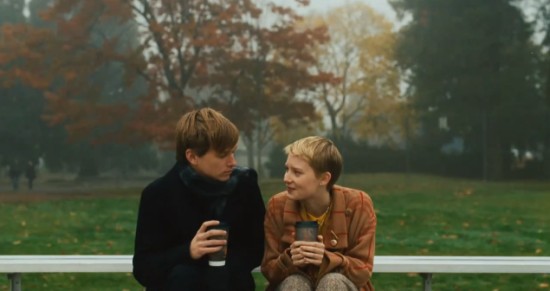
The film centres around two teens, Enoch (Henry Hopper) and Annabel (Mia Wasikowska), who strike up a relationship after meeting at a funeral. Enoch has been kicked out of school and spends his time crashing funerals and making chalk outlines of himself. Beside his aunt (Jane Adams), who he does not get along with, the only other thing in Enoch’s life is Hiroshi (Ryo Kase), the ghost of a Japanese kamikaze pilot. Moody as a result of events that took place in the past, Enoch does not let himself get emotionally attached to anyone. This all changes when he meets the pixieish Annabel. She not only accepts him for who he is, quirky ways and all, but also teaches him how to revel in the living as much as he does the dead. Just as Enoch begins to see future possibilities with Annabel, she reveals to him a secret that will drastically affect the couple’s relationship.
Restless is a film that often feels like two separate films struggling to co-exist. One obvious comparison for the film is Harold and Maude as it has all the quirkiness of that film right down to its moody young protagonist. The second film that Restless feels like at times is Sweet November. As a result there is an unevenness to the whole production that is directly related to the often cliché script. The plot arcs are just too obvious, even the up and down moments of Enoch and Annabel’s relationship feel like a paint-by-numbers production. The character of Enoch in particular becomes rather grating as the film progress. Many of his reveals do not deliver any impact because you know exactly what was coming. More often than not, you are wishing the various reveals would arrive sooner so that the film can get back to focusing on the elements that actually work well...mainly the performances.
Although I enjoyed Wasikowska’s work in The Kids Are All Right, and to a lesser extend Alice in Wonderland, this is the first film that truly made me believe all the hype surrounding her acting abilities. Wasikowska lights up the screen in every scene she is in and helps to keep you interested until the very end. Ryo Kase also delivers a strong performance as Hiroshi, a character that will most likely divide audiences. While it can be argued that there really is no need for Hiroshi in the film, he does offer another layer to Restless that I quite enjoyed. Enoch, despite Hopper’s decent performance, is just not that interesting a character to carry the film on his own. Hiroshi picks up the slack whenever Annabel is not on screen.
Restless is not an awful film by any means, it is just not one that you will remember in a few weeks. The film has several genuinely enjoyable moments, but is bogged down by its formulaic script. In ranking Gus Van Sant’s canon of films, Restless will probably get slotted somewhere in the middle for most cinephiles. It is an average film that never reaches its full potential.
Gus Van Sant is a director who can skilfully create films that appeal to both mainstream and independent cinema lovers. His talents are never in question as he has shown on numerous occasions that he is one the most interesting directors working today. However, this does not mean that he is immune from minor missteps here and there. Take his latest film Restless for example, at first glance it seems like it is a film that Van Sant would knock out the park as it features themes of youth, angst, and love. These are themes that he has maximized to wonderful heights in previous films. Sadly though, Restless somehow manages to miss the mark.
The film centres around two teens, Enoch (Henry Hopper) and Annabel (Mia Wasikowska), who strike up a relationship after meeting at a funeral. Enoch has been kicked out of school and spends his time crashing funerals and making chalk outlines of himself. Beside his aunt (Jane Adams), who he does not get along with, the only other thing in Enoch’s life is Hiroshi (Ryo Kase), the ghost of a Japanese kamikaze pilot. Moody as a result of events that took place in the past, Enoch does not let himself get emotionally attached to anyone. This all changes when he meets the pixieish Annabel. She not only accepts him for who he is, quirky ways and all, but also teaches him how to revel in the living as much as he does the dead. Just as Enoch begins to see future possibilities with Annabel, she reveals to him a secret that will drastically affect the couple’s relationship.
Restless is a film that often feels like two separate films struggling to co-exist. One obvious comparison for the film is Harold and Maude as it has all the quirkiness of that film right down to its moody young protagonist. The second film that Restless feels like at times is Sweet November. As a result there is an unevenness to the whole production that is directly related to the often cliché script. The plot arcs are just too obvious, even the up and down moments of Enoch and Annabel’s relationship feel like a paint-by-numbers production. The character of Enoch in particular becomes rather grating as the film progress. Many of his reveals do not deliver any impact because you know exactly what was coming. More often than not, you are wishing the various reveals would arrive sooner so that the film can get back to focusing on the elements that actually work well...mainly the performances.
Although I enjoyed Wasikowska’s work in The Kids Are All Right, and to a lesser extend Alice in Wonderland, this is the first film that truly made me believe all the hype surrounding her acting abilities. Wasikowska lights up the screen in every scene she is in and helps to keep you interested until the very end. Ryo Kase also delivers a strong performance as Hiroshi, a character that will most likely divide audiences. While it can be argued that there really is no need for Hiroshi in the film, he does offer another layer to Restless that I quite enjoyed. Enoch, despite Hopper’s decent performance, is just not that interesting a character to carry the film on his own. Hiroshi picks up the slack whenever Annabel is not on screen.
Restless is not an awful film by any means, it is just not one that you will remember in a few weeks. The film has several genuinely enjoyable moments, but is bogged down by its formulaic script. In ranking Gus Van Sant’s canon of films, Restless will probably get slotted somewhere in the middle for most cinephiles. It is an average film that never reaches its full potential.
Friday, September 9, 2011
TIFF Review: Into the Abyss
Into the Abyss
The issue of capital punishment has always been a hot topic of debate. Should someone die for the crimes they have committed? What if the crime was taking the life of another? Who has the right to judge who lives and who dies? Depending on whom you ask, the answers will vary drastically. Even I find myself wavering on which side of the fence I stand. It is one thing for me to say I am against capital punishment, which I am, but I honestly do not know how I would feel if I was in the same situation as the victim's family.
In his latest documentary, Into the Abyss, director Werner Herzog is clear on his stance against capital punishment. Herzog even goes as far as telling his interview subject Michael Perry, a convict schedule to die within 8 days, that he does not have to like him but respects his right to live as a human being. Into the Abyss pieces together the events of a triple homicide that took place in Conroe, Texas ten years ago. Despite each proclaiming their innocence, Perry and his friend Jason Burkett where convicted. Burkett only got a life sentence, for the senseless murders that resulted from a botched car theft scheme.
Herzog does not question whether or not Perry and Burkett are innocent, as he can only present the facts that are documented by the police. The versions of the events that both Perry and Burkett recount are vastly different from each other. The only commonality being that each man places the blame on the other for the crime. The fact that both men were in their teens at the time makes their crimes even more disturbing. Herzog skilfully uses testimony from Perry and Burkett, as well as those who knew them in the community, to show how poverty and a recurring cycle of drug abuse and violence inevitably lead the men to their current place.
Into the Abyss does not only focus on the crimes that people commit, but also those affected as result of it. This includes everyone from the families of the victims, the preacher who prays with the death row inmates in their final moments, and even the prison guards responsible for strapping the men like Perry onto the tables where the lethal injection will take place. The fascinating thing about Herzog’s conversations with these individuals is how each person, especially the victim’s families, are deeply scarred in some form or another yet still believe that life is not something the legal system should be taking away from people. In one powerful moment a prison guard ask the question “how are you going to live your dash?” He is referring to the dash that appears on tombstones in between the date of birth and the date of death. That dash represents our entire lives and the choices we make within it.
Despite the heavy subject matter, and being far more restraint than in previous films, Werner Herzog still manages to inject the film with moments of genuine humour. Whether it is discussions on squirrels, conspiracies surrounding how Burkett’s wife got pregnant despite never consummating the marriage, or tattooing the name of a girlfriend on an arm, there are plenty of lighter moments that help Herzog to reaffirm how life, even in its simplest moments, is wonderful. Into the Abyss may feature a more subdued Herzog, but it is still a documentary that should not be missed.
The issue of capital punishment has always been a hot topic of debate. Should someone die for the crimes they have committed? What if the crime was taking the life of another? Who has the right to judge who lives and who dies? Depending on whom you ask, the answers will vary drastically. Even I find myself wavering on which side of the fence I stand. It is one thing for me to say I am against capital punishment, which I am, but I honestly do not know how I would feel if I was in the same situation as the victim's family.
In his latest documentary, Into the Abyss, director Werner Herzog is clear on his stance against capital punishment. Herzog even goes as far as telling his interview subject Michael Perry, a convict schedule to die within 8 days, that he does not have to like him but respects his right to live as a human being. Into the Abyss pieces together the events of a triple homicide that took place in Conroe, Texas ten years ago. Despite each proclaiming their innocence, Perry and his friend Jason Burkett where convicted. Burkett only got a life sentence, for the senseless murders that resulted from a botched car theft scheme.
Herzog does not question whether or not Perry and Burkett are innocent, as he can only present the facts that are documented by the police. The versions of the events that both Perry and Burkett recount are vastly different from each other. The only commonality being that each man places the blame on the other for the crime. The fact that both men were in their teens at the time makes their crimes even more disturbing. Herzog skilfully uses testimony from Perry and Burkett, as well as those who knew them in the community, to show how poverty and a recurring cycle of drug abuse and violence inevitably lead the men to their current place.
Into the Abyss does not only focus on the crimes that people commit, but also those affected as result of it. This includes everyone from the families of the victims, the preacher who prays with the death row inmates in their final moments, and even the prison guards responsible for strapping the men like Perry onto the tables where the lethal injection will take place. The fascinating thing about Herzog’s conversations with these individuals is how each person, especially the victim’s families, are deeply scarred in some form or another yet still believe that life is not something the legal system should be taking away from people. In one powerful moment a prison guard ask the question “how are you going to live your dash?” He is referring to the dash that appears on tombstones in between the date of birth and the date of death. That dash represents our entire lives and the choices we make within it.
Despite the heavy subject matter, and being far more restraint than in previous films, Werner Herzog still manages to inject the film with moments of genuine humour. Whether it is discussions on squirrels, conspiracies surrounding how Burkett’s wife got pregnant despite never consummating the marriage, or tattooing the name of a girlfriend on an arm, there are plenty of lighter moments that help Herzog to reaffirm how life, even in its simplest moments, is wonderful. Into the Abyss may feature a more subdued Herzog, but it is still a documentary that should not be missed.
Subscribe to:
Posts (Atom)