11 Flowers
11 Flowers may be Wang Xiaoshuai’s most personal film to date. Taking place in 1975, a year before the Mao’s death, the film follows eleven year-old Wang Han (Liu Wenqing) as he goes about his daily life in his rural town in southwest China. After displaying a strong work ethic, Han is appointed school gym leader and is told that he should get a new shirt as he will be the one that the students look up to. Reluctant at first, Han’s mother (Yan Ni) spends a year’s worth of cloth rations to get the material needed to make the shirt. After impressing his friends with new attire, Han is horrified when his shirt is stolen by a wounded fugitive, Jueqiang (Wang Ziyi), taking shelter in the woods.
Now a story about a boy and his stolen shirt may not sound compelling, but 11 Flowers is far deeper than its premise leads you to believe. The film is really a tale of a society repressed by its government. Han’s shirt represents a loss of innocence. Whether Han is playing hide and seek with his friends or searching for his stolen shirt, he is constantly confronted with the harsh reality of the time in which he lives. Xiaoshuai shows how the Cultural Revolution impacted every single facet of life.
The era was a time of poverty and widespread violence. Even those fortunate enough to have jobs had to work in less than desirable conditions. This is encapsulated nicely through Han’s father (Wang Jingchun) , an artistic and intellectual person who is forced to leave his job with the Opera to do manual work in the rural town. His father not only gets injured while on the job, but also gets attacked by the Red Guard when he attempts to help a fellow co-worker in distress.
Throughout 11 Flowers, Xiaoshuai shows how people were often forced to take justice into their own hands. The story of Jueqiang is the film’s most fascinating subplot, as his crimes are hotly debated by many of the villagers. While outlandish rumours fly about town, Han discovers what lead Jueqiang to murder a respected factory owner. It is this encounter that really changes Han by the end of the film. While his friends all race to see Jueqiang’s public execution, Han stops and decides to head home. The scene subtly signifies the end of Han’s childish innocence.
11 Flowers is a poignant film that effectively displays the Cultural Revolution from the perspective of a child. Wang Xiaoshuai’s cast does a great job of hitting all the right emotions. His young lead, Liu Wenqing, manages to carry the bulk of the film’s workload while still maintaining Han’s overall naivetĂ©. If there is one knock against 11 Flowers, and it is a minor one, it is that the film feels longer than its actual running time. However, when dealing with such heavy issues as the Cultural Revolution, one should not expect a swift pace. Wang Xiaoshuai’s 11 Flowers offers good insight on what the director experienced as a child growing up in China. The audience sees how the events of Xiaoshuai’s past have shaped him into the director he is today.
Showing posts with label TIFF11. Show all posts
Saturday, September 17, 2011
Friday, September 16, 2011
TIFF Review: Keyhole
Keyhole
There are some films that reward the audience instantly for sticking with it and then there are others that require multiple viewings before one can truly understand the director’s goal. Keyhole is a film that fits in the latter category. It can be processed in different ways depending on the number of times you see it. The question is how many people will be willing to sit through the film more than once?
Taking its cue from both Homers’ The Odyssey and traditional ghost stories, Keyhole follows a gangster named Ulysses (Jason Patric), who returns to his childhood home in a quest to be reunited with his wife Hyacinth (Isabella Rossellini). Aided by Denny (Brooke Palson), a woman who drowned but is now back to life, and a bound hostage, Manners (David Wontner), Ulysses must make way his way through each room in the house. Complicating issues even further, Manners is actually Ulysses’ son, although Ulysses does not realize it. As he makes his way to the bedroom where his wife and the spirit of her father are (Louis Negin), Ulysses slowly begins to recollect all the events of his past.
Those going into Keyhole expecting The Odyssey told as a 30s gangster tale will sorely be disappointed. Even director Guy Maddin himself has stated that he views the film as “an autobiography of a house”. While it is obvious that the house has witnessed a lot over the years, it does not necessarily make for a coherent tale. Keyhole often feels like a piece of art that only the artist, in this case Maddin, truly understands.
Diehard Guy Maddin fans may eat up Keyhole’s artistic excess but most others will find the film impenetrable to decipher. The frustrating thing about Keyhole is that it has the potential to be a very good film. If nothing else, the film is far from boring as Maddin injects the film with humour and several inspired moments. Setting the entire film in the confines of one house does the story a grave disservice as many of Maddin’s ideas are never fully realized.
Despite featuring the acting talents of Patrics, Rossellini, Negin, and Udo Kier, the performances in the film are all over the place due in part to the uneven level of melodrama in Maddin’s script. The actors rarely seem to be on the same page in regards to what the overall tone should be. Again, everything may actually come together nicely upon multiple viewings of Keyhole, but it is tough to think that anyone besides hardcore Maddin fans would want to subject themselves to this mess more than once.
There are some films that reward the audience instantly for sticking with it and then there are others that require multiple viewings before one can truly understand the director’s goal. Keyhole is a film that fits in the latter category. It can be processed in different ways depending on the number of times you see it. The question is how many people will be willing to sit through the film more than once?
Taking its cue from both Homers’ The Odyssey and traditional ghost stories, Keyhole follows a gangster named Ulysses (Jason Patric), who returns to his childhood home in a quest to be reunited with his wife Hyacinth (Isabella Rossellini). Aided by Denny (Brooke Palson), a woman who drowned but is now back to life, and a bound hostage, Manners (David Wontner), Ulysses must make way his way through each room in the house. Complicating issues even further, Manners is actually Ulysses’ son, although Ulysses does not realize it. As he makes his way to the bedroom where his wife and the spirit of her father are (Louis Negin), Ulysses slowly begins to recollect all the events of his past.
Those going into Keyhole expecting The Odyssey told as a 30s gangster tale will sorely be disappointed. Even director Guy Maddin himself has stated that he views the film as “an autobiography of a house”. While it is obvious that the house has witnessed a lot over the years, it does not necessarily make for a coherent tale. Keyhole often feels like a piece of art that only the artist, in this case Maddin, truly understands.
Diehard Guy Maddin fans may eat up Keyhole’s artistic excess but most others will find the film impenetrable to decipher. The frustrating thing about Keyhole is that it has the potential to be a very good film. If nothing else, the film is far from boring as Maddin injects the film with humour and several inspired moments. Setting the entire film in the confines of one house does the story a grave disservice as many of Maddin’s ideas are never fully realized.
Despite featuring the acting talents of Patrics, Rossellini, Negin, and Udo Kier, the performances in the film are all over the place due in part to the uneven level of melodrama in Maddin’s script. The actors rarely seem to be on the same page in regards to what the overall tone should be. Again, everything may actually come together nicely upon multiple viewings of Keyhole, but it is tough to think that anyone besides hardcore Maddin fans would want to subject themselves to this mess more than once.
Thursday, September 15, 2011
TIFF Review: Lipstikka
Lipstikka (Odem)
The nature of female friendships can be complicated at the best of times. Throw several external factors in the mix and the intricate web only gets increasingly complex. In his latest film, Canadian-born, Israeli-raised, director Jonathan Sagall examines how everything from love to recollections of the past can damage a friendship forever.
Lara (Clara Khoury) is a Palestinian living in London with her British husband and seven year-old son. Despite being in a loveless marriage, Lara maintains the appearance of leading an idyllic life. When her old friend Inam (Nataly Attiya) arrives unexpectedly, Lara’s life is immediately thrown for a loop. Inam clearly has unfinished business from the past to settle and begins a subtle game of emotional sabotage. As the two women try their best to fake pleasantries, they each reflect on the events that brought their relationship to this strained point.
Sagall’s film utilizes a series of flashbacks to piece together several of the events that impacted Lara and Inam’s relationship. However, by giving both women separate recollections of how the events of the past actually occurred, Sagall provides audiences with a unique insight into the characters and their relationship. It alters how the audience views both women throughout the film as they end up nothing like the mother and whore archetypes that Sagall presents them to be in the beginning.
Lipstikka, at times, attempts to cast too wide a net in regards to its subject matter. The film tackles issues such as abortion, sexual discovery, mental illness, infidelity, and the Israeli/Palestinian conflict. Sagall makes it work for the most part, but the film loses it rhythm in the final act. The last twenty minutes feel like Sagall was desperate to find away to tie up all the loose ends.
Final act aside, Lipstikka is a film that will keep the audience interested throughout. Sagall does a good job of maintaining the mystery of the women’s past by slowly unveiling information. The performances by Clara Khoury and Nataly Attiya are riveting and the actresses make up for the film’s occasional shortcomings. Although the film may not provide the answers audiences hope for, Lipstikka has enough positive elements going for it to make it worth seeing.
The nature of female friendships can be complicated at the best of times. Throw several external factors in the mix and the intricate web only gets increasingly complex. In his latest film, Canadian-born, Israeli-raised, director Jonathan Sagall examines how everything from love to recollections of the past can damage a friendship forever.
Lara (Clara Khoury) is a Palestinian living in London with her British husband and seven year-old son. Despite being in a loveless marriage, Lara maintains the appearance of leading an idyllic life. When her old friend Inam (Nataly Attiya) arrives unexpectedly, Lara’s life is immediately thrown for a loop. Inam clearly has unfinished business from the past to settle and begins a subtle game of emotional sabotage. As the two women try their best to fake pleasantries, they each reflect on the events that brought their relationship to this strained point.
Sagall’s film utilizes a series of flashbacks to piece together several of the events that impacted Lara and Inam’s relationship. However, by giving both women separate recollections of how the events of the past actually occurred, Sagall provides audiences with a unique insight into the characters and their relationship. It alters how the audience views both women throughout the film as they end up nothing like the mother and whore archetypes that Sagall presents them to be in the beginning.
Lipstikka, at times, attempts to cast too wide a net in regards to its subject matter. The film tackles issues such as abortion, sexual discovery, mental illness, infidelity, and the Israeli/Palestinian conflict. Sagall makes it work for the most part, but the film loses it rhythm in the final act. The last twenty minutes feel like Sagall was desperate to find away to tie up all the loose ends.
Final act aside, Lipstikka is a film that will keep the audience interested throughout. Sagall does a good job of maintaining the mystery of the women’s past by slowly unveiling information. The performances by Clara Khoury and Nataly Attiya are riveting and the actresses make up for the film’s occasional shortcomings. Although the film may not provide the answers audiences hope for, Lipstikka has enough positive elements going for it to make it worth seeing.
Wednesday, September 14, 2011
TIFF Picks - September 14, 2011
Generation P – Victor Ginzburg
TIFF synopsis: “After the fall of communism in Russia a young advertising executive seeks inspiration from hallucinogenic drugs and uses a ouija board to summon the spirit of Che Guevara for advice.”Why I want to see it: A social satire akin to How to Get Ahead in Advertising that features the spirit of Che Guevara.
Screening Times
Wednesday September 14
AMC 6
8:30pm
Thursday September 15
Scotiabank Theatre 2
6:30pm
Friday September 16
Scotiabank Theatre 11
10:00am
Dark Girls – Bill Duke and D. Channsin Berry
TIFF synopsis: “In this emotional and heartfelt documentary, directors Bill Duke and D. Channsin Berry set out to examine why skin-colour bias persists among people of African descent, and how it affects the lives of women on the receiving end.”Why I want to see it: I am always interested in documentaries that look at how a particular culture perceives themselves, as well as how they are perceived by others.
Screening Times
Wednesday September 14
Ryerson
9:15pm
Friday September 16
Scotiabank Theatre 1
6:30pm
Sunday September 18
AMC 10
4:00pm
The Student – Santiago Mitre
TIFF synopsis: “The graffitied halls, run down classrooms and surrounding streets of the University of Buenos Aires provides the ideal location for Santiago Mitre’s briskly paced debut, The Student. Mitre brilliantly exposes the backroom dealings and negotiations in the murky world of student politics, a microcosm for the world at large, in this fictional account of a young man’s discovery of his talent for politicking through his seduction of an assistant professor and activist.”Why I want to see it: The film uses school politics as commentary for the world at large. Reminds me of Election though I know the two films are vastly different.
Screening Times
Wednesday September 14
AMC 9
9:00pm
Saturday September 17
AMC 7
10:00am
Tuesday, September 13, 2011
TIFF Picks - September 13, 2011
Hard Core Logo II – Bruce MacDonald
TIFF synopsis: “Bruce MacDonald’s post-modernist, wryly self-conscious Hard Core Logo II, the sequel to his celebrated punk-rock faux doc, doesn’t so much mock the notion of sequels as take a blow torch to it. Protagonist is “Bruce” (McDonald), the director in the original film. He’s been living the Hollywood life in Laurel Canyon, until his series is cancelled and the only gig offered him is a doc for Wiccan TV about a singer, Care Failure, who claims she’s been possessed by Joe Dick, the leader of the punk band Hard Core Logo and the principal in “Bruce”’s doc. The focus here is the filmmaking process, but the film also poses questions about the unavoidably invasive role of the documentary filmmaker -- and, more significantly, friendship and betrayal within the film world. ”Why I want to see it: Bruce McDonald always makes interesting films and rarely misses the mark. I am curious to see how much of the film actually links back to the original Hard Core Logo
Screening Times
Tuesday September 13
Scotiabank Theatre 4
10:15pm
Saturday September 17
AMC 3
12:45pm
Damsels in Distress – Whit Stillman
TIFF synopsis: “Back after a thirteen-year hiatus, Whit Stillman returns with Damsels in Distress- a film that is distinctly offbeat, even manic, compared to his classic nineties comedies of manners, and yet retains his precise wit and refined dialogue. Damsels in Distress takes a unique look into the psyche of privileged American youth, focusing on a group of undergraduates at a leafy East Coast university that has only recently begun to accept female students. ”Why I want to see it: Finally, after thirteen-years of waiting, a new Whit Stillman film is released!
Screening Times
Tuesday September 13
Visa Screening Room (Elgin)
6:00pm
Wednesday September 14
Scotiabank Theatre 4
9:15am
Amy George – Yonah Lewis and Calvin Thomas.
TIFF synopsis: “A feast for the heart and mind alike, filled with tender moments of daily teenage life turned upside-down by clumsy desire and hormonal hiccups, Amy George tells the story of Jesse, the 13 year old only child of Riverdale intellectuals.”Why I want to see it: A coming-of-age film that has faint a The Squid and the Whale vibe.
Screening Times
Tuesday September 13
AMC 9
6:00pm
Thursday September 15
AMC 2
9:15pm
Saturday September 17
AMC 10
12:30pm
Monday, September 12, 2011
TIFF Picks - September 12, 2011
Coriolanus – Ralph Fiennes
TIFF synopsis: “ As director and star, Ralph Fiennes brings William Shakespeare's visceral history play to the big screen for the first time. Coriolanus is a drama for the ages, a commentary on the precarious draw of war and an auspicious directorial debut from one of the world's great classical actors.”Why I want to see it: If Ralph Fiennes in the director’s chair, tackling Shakespeare, was not exciting enough, the film also features the acting talents of Vanessa Redgrave, Brian Cox, Gerard Butler and Jessica Chastain.
Screening Times
Monday September 12
Visa Screening Room (Elgin)
6:00pm
Saturday September 17
Scotiabank Theatre 3
9:30am
CafĂ© de flore – Jean-Marc VallĂ©e
TIFF synopsis: “ Jean-Marc VallĂ©e returns to French-language filmmaking with this powerful and unconventional love story that weaves together two disparate narratives to create a tale of emotion and destiny. The stories center on a devoted mother (Vanessa Paradis) of a young boy with Down syndrome in 1969 Paris, and a successful DJ (Kevin Parent) who is going through an emotional divorce in present-day Montreal.”Why I want to see it: Jean-Marc VallĂ©e is currently one of Canada’s top directors. It is only a matter of time before he becomes a household name in America. If CafĂ© de flore is anything like C.R.A.Z.Y. then the film will be a treat indeed.
Screening Times
Monday September 12
Princess Of Wales
10:00pm
Wednesday September 14
TIFF Bell Lightbox 2
11:45am
Headshot – Pen-ek Ratanaruang
TIFF synopsis: “Tul, a hitman, is shot in the head during an assignment. He wakes up after a three-month coma to find that he sees everything upside down, literally. Then he meets a girl that turns his world even more upside down. Who was trying to kill him in the first place?”Why I want to see it: Early buzz from the press screenings claim that this film is not to be missed.
Screening Times
Monday September 12
Scotiabank Theatre 2
5:30pm
Saturday September 17
TIFF Bell Lightbox 1
3:00pm
Saturday, September 10, 2011
TIFF Picks - September 10, 2011
A Separation – Asghar Farhadi
TIFF synopsis: “Simin files for divorce from husband Nader when he refuses to leave the country in order to guarantee their daughter a better future, but the pair will soon join each other in course over a very different case. ”Why I want to see it: This was high on my radar the minute the programme book was released. It seems to provide an interesting take on divorce and cultural practices. Something tells me that this film will be a big hit come award season.
Screening Times
Saturday September 10
TIFF Bell Lightbox 3
4:00pm
Sunday September 11
AMC 9
11:45am
Your Next – Adam Wingard
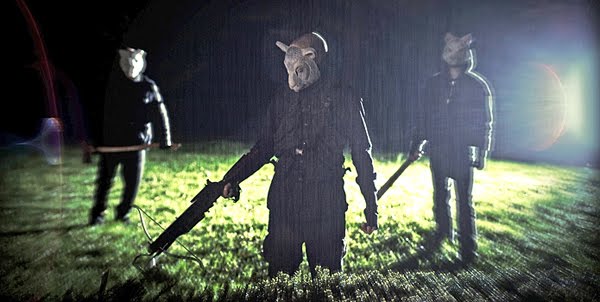
TIFF synopsis: “A family reunion spirals into a night of terror when mysterious assailants wearing animal masks lay siege against the clan in the new film by the director and writer of last year's Festival indie hit, A Horrible Way To Die.”Why I want to see it: This film sounds even more disturbing than Funny Games and The Strangers combined.
Screening Times
Saturday September 10
Ryerson
11:59pm
Monday September 12
AMC 7
6:30pm
Friday September 16
TIFF Bell Lightbox 2
4:00pm
Free Men – IsmaĂ«l Ferroukhi
TIFF synopsis: “Set in German-occupied Paris in 1942, Younes, an Algerian black marketer, is arrested by the police and agrees to spy on a Parisian mosque suspected of helping resistance fighters and Jews. Witnessing the horrors of the Nazi regime, Younes stops collaborating to become a freedom fighter.”Why I want to see it: I am always intrigued by stories where average people end up becoming freedom fighters.
Screening Times
Saturday September 10
AMC 6
10:00pm
Sunday September 11
AMC 1
10:00am
Saturday September 17
Scotiabank Theatre 11
10:00am
Wednesday, September 7, 2011
Sharing the Blogging Love (TIFF Edition)
In Toronto the film equivalent of Christmas kicks off tomorrow with the launch of the 2011 Toronto International Film Festival. This year I will be doing something a little different for my TIFF coverage. In the past, due to my TIFF schedules, I have posted my reviews a few days after the festival ends. Starting tomorrow I will be conducting my TIFF coverage with the introduction of the daily TIFF Picks feature. Each day I will highlight two or three less publicized films to keep an eye out for. As of Saturday I will be featuring a new TIFF review each day. Since it is impossible for to see every film at TIFF, here are some other sites that will be covering the festival as well:
So consider yourself covered for the next week when it comes to all things TIFF.
Monday, September 5, 2011
The TIFF Rules
A few months ago, when I was covering Hot Docs, I shared five tips for surviving film festivals/movie marathons. Today I want talk about the TIFF rules. I do not mean the rules in regards to how you order TIFF tickets, or the line-up policies for star-studded films at Roy Thomson hall or the Visa Screening Room. I am talking about the five rules that each person attending TIFF has for how they will experience the festival. There are no right or wrong rules, as these rules are unique to each individual person. For some people the rules may consist of only watching Midnight Madness genre films, or only films which feature big name Hollywood starts, etc. The only common aspect to each person’s rule is that at some point at least one rule will get broken. Here are the five rules I have when attending TIFF:
1) No September films: TIFF is notorious for playing a few films (e.g. The Informant!, Never Let Me Go, Buried, and Easy A) that will be released worldwide while the festival is still going on. I generally try to avoid any TIFF film that opens in the month of September as I figure that I can see the same film for far cheaper in regular theatres. Unfortunately this rule inadvertently got broken this year as I got tickets to Gus Van Sant’s Restless not realizing that its release date was the second Friday of TIFF. The funny thing is, breaking rule number one was a result of rule number two.
2) Keep my films close, and my theatre locations closer: There was a time when I use to get a thrill out of running halfway across town to catch a film at TIFF. However, the older I get the less appealing this becomes. I noticed in the last few years I have starting picking films that either play in the same location or at least in near by locations. For example, since I am already seeing Herzog’s Into the Abyss at the Ryerson theatre I opt to see Restless immediately after instead of trying to make it to the TIFF Lightbox theatre in a in a mere five minutes.
3) Allow a few “demon” picks: Sometimes when attending the festival when friends are too, it is a good idea to catch a few films together. Even if this means seeing some films that you initially had no desire to see. For example, in the past I have attended TIFF with my good friend Colleen (a.k.a. demon). While a few of her picks have been less than stellar, both Tuck Everlasting and Colin Firth’s Trauma painfully come to mind, she has pulled out numerous winners that I would have missed otherwise. Some of these films include: In America, The Magdalene Sisters, and A Film with Me in It.
4) At least one Canadian film: I usually aim to see one film from every category (e.g. Special Presentations, Midnight Madness, Discovery, Contemporary World Cinema, etc.), but I make a special point to squeeze in a few Canadian films. Regardless of whether they come from big name Canadian directors, like Cronenberg, or an up and coming Canadian director in the Visions category, I do not feel right attend a festival as big as TIFF and not supporting my country’s homegrown talent. So whether I am seeing 8 films or 32 films, I make sure to incorporate at least one Canadian feature or short.
5) Randomness is good: Every year I pick one or two films at random. I do not even read what the program book has to say on the particular film until my picks are in. I like the idea of going into a film completely blind and possibly discovering something truly magically. This year’s random pick is 11 Flowers, hopefully it will bring the same level of joy that previous random selections (e.g. Kontroll, The Art of the Steal, The Spanish film November, and Treeless Mountain) have brought me.
Thursday, September 1, 2011
My 2011 TIFF Schedule
[Updated September 2, 2011]
Yes I know Thursdays are usually the “Which is Better?” debate day, but that feature will up tomorrow. Instead I want to talk a little about TIFF as the film festival officially starts one week today! This will be my 10th TIFF experience in the past 11 years. While I will be seeing far less films than usual, I am very appreciative that I have been able to have the festival experience at all. I know that we here in Toronto are spoiled when it comes to movie festivals. It seems that there are different film festivals happening every week in the city. Regardless, TIFF is something I think every movie lover should experience at least once. Even if you only see one film, it is still worth the experience. Below are the films I will be seeing at this year’s festival:
Into the Abyss – Werner Herzog
According to the TIFF programme book: “Crime stories can often fall into a predictable pattern of whodunit, but trust Werner Herzog to bring his own unique approach to the genre. He focuses on a triple homicide case in Conroe, Texas, that occurred ten years ago. Epitomizing the word “senseless,” the apparent motive behind the murders was to steal a car for a joyride... In a departure from films like Cave of Forgotten Dreams or Grizzly Man, Herzog refrains from his distinctive and familiar voice-over commentary, but his presence is felt through his questions. In addition to interviewing Perry and Burkett, he talks to their relatives, the victims’ families, law enforcement officials and others. Exploring an American gothic landscape, he takes us from luxury homes to impoverished trailers to prison cells.”
Restless – Gus Van Sant
According to the TIFF programme book: ”A delicate love story about two outsiders drawn to each other by a fascination with death, Restless finds the director in a ruminative mood. Enoch is a somewhat formal, withdrawn teenager who crashes other people’s funerals. In his fantasy life he plays games with an imaginary friend, a Japanese kamikaze pilot from the Second World War, but what has prompted his obsession with death lies in the details of his own personal life. One day, he meets another funeral crasher, the pixieish Annabel, and as their tentative relationship progresses, she draws the young man out of his shell. Wayward, beautiful and ultimately fragile, Annabel has her own secret, which adds an intense poignancy to their imagined future together.”
The Artist – Michel Hazanavicius
According to the TIFF programme book: “A love letter to 1920s Hollywood, Michel Hazanavicius’ The Artist resurrects silent cinema as a powerful and complex storytelling medium. Shot entirely in black and white, without dialogue and in a traditional 1.33 aspect ratio, the film remains faithful to the period it represents, avoiding the trap of pastiche through a sincere appreciation of the cinematic possibilities offered by classic silent film.”
A Monster in Paris - Bibo Bergeron
According to the TIFF programme book: “Paris, 1910. The streets of the city are flooded. The Eiffel Tower looms over a temporary lake and certain streets sport makeshift bridges so Parisians can go about their daily routines. But spirits are high for the citizens of this romantic city, including those of Emile (Jay Harrington), a lovelorn cinema projectionist, and his madcap friend Raoul (Adam Goldberg), a delivery man by day and inventor by night... Marvelously animated, A Monster in Paris boasts the vocal talents of top-notch comedians and singers.”
Breathing - Karl Markovics
According to the TIFF programme book: “If done right, restraint can be an art unto itself, and actor-turned-director Karl Markovics has it down pat. While his protagonist Roman (Thomas Schubert) all but holds his breath waiting to be released from jail, Markovics holds back on details from Roman’s past that would bog down the viewer with emotional involvement. He simply allows fragments of information to come trickling out, made all the more significant for being withheld.”
Keyhole - Guy Maddin
According to the TIFF programme book: “Homer’s Odyssey has inspired many an artist, and Maddin pays homage to the epic poem in his own iconoclastic manner. But it’s the gangster and melodrama genres, as well as Maddin’s cinematic influences (particularly Buñuel and von Sternberg), that inform the film’s rich style. With all of this in mind, Maddin crafts a startling and original film that echoes the past yet is undeniably, refreshingly his own.”
11 Flowers - Wang Xiaoshuai
According to the TIFF programme book:"It’s 1975, southwest China, a decade after the start of the Cultural Revolution that turned the country upside down. Wang Han, an eleven-year-old boy, lives with his parents and younger sister in a large community courtyard... One day while playing by the river, Han encounters a bleeding man, who runs away with the boy’s new shirt. Chasing the man into the woods, Han suddenly finds himself face to face with an accused murderer."
Lipstikka - Jonathan Sagall
According to the TIFF programme book: ”Memory is a mutable thing. If two people share an experience and then years later finally speak of it again, whose version of events is the truest? This question is only one of many that writer/director Jonathan Sagall grapples with in Lipstikka, a beautifully attenuated drama about love, sex, memory and the tangled bonds of female friendship.”
The full list of films playing at TIFF this year can be found at the festival's website.
Yes I know Thursdays are usually the “Which is Better?” debate day, but that feature will up tomorrow. Instead I want to talk a little about TIFF as the film festival officially starts one week today! This will be my 10th TIFF experience in the past 11 years. While I will be seeing far less films than usual, I am very appreciative that I have been able to have the festival experience at all. I know that we here in Toronto are spoiled when it comes to movie festivals. It seems that there are different film festivals happening every week in the city. Regardless, TIFF is something I think every movie lover should experience at least once. Even if you only see one film, it is still worth the experience. Below are the films I will be seeing at this year’s festival:
Into the Abyss – Werner Herzog
According to the TIFF programme book: “Crime stories can often fall into a predictable pattern of whodunit, but trust Werner Herzog to bring his own unique approach to the genre. He focuses on a triple homicide case in Conroe, Texas, that occurred ten years ago. Epitomizing the word “senseless,” the apparent motive behind the murders was to steal a car for a joyride... In a departure from films like Cave of Forgotten Dreams or Grizzly Man, Herzog refrains from his distinctive and familiar voice-over commentary, but his presence is felt through his questions. In addition to interviewing Perry and Burkett, he talks to their relatives, the victims’ families, law enforcement officials and others. Exploring an American gothic landscape, he takes us from luxury homes to impoverished trailers to prison cells.”
Restless – Gus Van Sant
According to the TIFF programme book: ”A delicate love story about two outsiders drawn to each other by a fascination with death, Restless finds the director in a ruminative mood. Enoch is a somewhat formal, withdrawn teenager who crashes other people’s funerals. In his fantasy life he plays games with an imaginary friend, a Japanese kamikaze pilot from the Second World War, but what has prompted his obsession with death lies in the details of his own personal life. One day, he meets another funeral crasher, the pixieish Annabel, and as their tentative relationship progresses, she draws the young man out of his shell. Wayward, beautiful and ultimately fragile, Annabel has her own secret, which adds an intense poignancy to their imagined future together.”
The Artist – Michel Hazanavicius
According to the TIFF programme book: “A love letter to 1920s Hollywood, Michel Hazanavicius’ The Artist resurrects silent cinema as a powerful and complex storytelling medium. Shot entirely in black and white, without dialogue and in a traditional 1.33 aspect ratio, the film remains faithful to the period it represents, avoiding the trap of pastiche through a sincere appreciation of the cinematic possibilities offered by classic silent film.”
A Monster in Paris - Bibo Bergeron
According to the TIFF programme book: “Paris, 1910. The streets of the city are flooded. The Eiffel Tower looms over a temporary lake and certain streets sport makeshift bridges so Parisians can go about their daily routines. But spirits are high for the citizens of this romantic city, including those of Emile (Jay Harrington), a lovelorn cinema projectionist, and his madcap friend Raoul (Adam Goldberg), a delivery man by day and inventor by night... Marvelously animated, A Monster in Paris boasts the vocal talents of top-notch comedians and singers.”
Breathing - Karl Markovics
According to the TIFF programme book: “If done right, restraint can be an art unto itself, and actor-turned-director Karl Markovics has it down pat. While his protagonist Roman (Thomas Schubert) all but holds his breath waiting to be released from jail, Markovics holds back on details from Roman’s past that would bog down the viewer with emotional involvement. He simply allows fragments of information to come trickling out, made all the more significant for being withheld.”
Keyhole - Guy Maddin
According to the TIFF programme book: “Homer’s Odyssey has inspired many an artist, and Maddin pays homage to the epic poem in his own iconoclastic manner. But it’s the gangster and melodrama genres, as well as Maddin’s cinematic influences (particularly Buñuel and von Sternberg), that inform the film’s rich style. With all of this in mind, Maddin crafts a startling and original film that echoes the past yet is undeniably, refreshingly his own.”
11 Flowers - Wang Xiaoshuai
According to the TIFF programme book:"It’s 1975, southwest China, a decade after the start of the Cultural Revolution that turned the country upside down. Wang Han, an eleven-year-old boy, lives with his parents and younger sister in a large community courtyard... One day while playing by the river, Han encounters a bleeding man, who runs away with the boy’s new shirt. Chasing the man into the woods, Han suddenly finds himself face to face with an accused murderer."
Lipstikka - Jonathan Sagall
According to the TIFF programme book: ”Memory is a mutable thing. If two people share an experience and then years later finally speak of it again, whose version of events is the truest? This question is only one of many that writer/director Jonathan Sagall grapples with in Lipstikka, a beautifully attenuated drama about love, sex, memory and the tangled bonds of female friendship.”
The full list of films playing at TIFF this year can be found at the festival's website.
Subscribe to:
Posts (Atom)