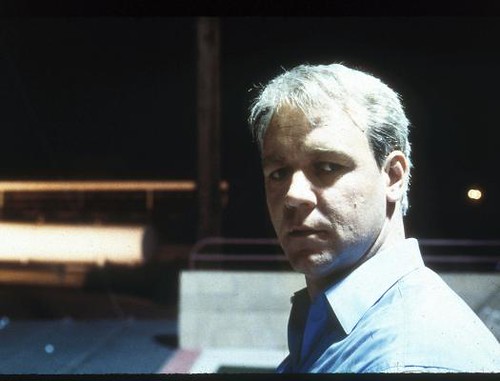
I Am Cuba
The Must See List series has been a rather interesting venture so far. Not only am I catching up on some great films, but I am discovering amazing ones that I never knew existed. One example of this is I Am Cuba, a film that was recommended by fellow Toronto film blogger Bob from Eternal Sunshine of the Logical Mind. I was a little apprehensive when I discovered that it was a film about Cuba with a Russian director, Mikhail Kalatozov. I was not sure what slant the movie would take. However, I trust Bob’s taste in films, and considering that he has not lead me astray so far, I tried to go in with an open mind and I am glad I did.
Originally released in 1964, but largely ignored until the likes of Martin Scorsese and Francis Ford Coppola sang its praises in the 90’s, I Am Cuba is a film that explores life in Cuba prior to the Castro-led revolution. Told through four distinct vignettes, and guided by a female voice-over representing the land itself, the film mixes the dreamy allure of Cuba with a stark realism of life under the dictatorship of Fulgencio Batista. One story focus on Maria (Luz María Collazo), a woman from a shanty town who works as a dancer at a posh American friendly casino, whose morals are tested when a wealthy American offers her money for a one-night fling. The second story centres around a farmer, Pedro (José Gallardo), whose farm land has been sold to a major corporation. The third, and most compelling story, follows a pro-revolution student, Enrique (Raúl García), who is selected to assassinate a prominent figure. And the last story involves a farmer, Alberto (Sergio Corrieri), who ends up joining the rebel army after his house is bombed by the government in error.
What immediately strikes the viewer about I Am Cuba is how stunningly beautiful the film is. Even when documenting some of Cuba’s less than desirable moments, the film finds a way to make the land seem appealing. Kalatozov uses many smart camera techniques to give the film a grand scale feel despite its modest budget. Whether he is mimicking what feels like to fall from great height, pretending the camera is a pack of army dogs chasing after a rebel solider, or staging an elaborate bombing sequence where you never actually see the planes, Kalatozov’s film is really a treat to watch. There is a fantastic tracking shot where the camera follows a funeral procession from street level, then rises up four or five stories, goes through a window of a factory, and proceeds through the factory until it gets to the next window. The audience cannot help but ponder how such a shot was achieved back then.
The film is stunning to look at, but there is also a poetic charm to it as well. While many cinephiles tend to argue the poetic appeal of films such as Tree of Life, this film actually finds a way to incorporate poetry into the overall narrative without it being a distraction. Cuba’s voice-overs are especially effective as they really hit home the message that outsiders turn a blind eye to the oppression of the people. It also must be said that the music in the film plays just as an important role as the poetry. In many ways the music is an additional character prominently featured in each of the vignettes.
I Am Cuba does have a very strong pro-Castro slant, but that should not deter audiences from seeing the film. If anything it makes the film even more intriguing as it provides a point of view rarely seen on screen. Even if they do not agree with the politics, the four vignettes and the overall technical marvel of the film will be enough to keep audiences intrigued over multiple viewings.
I Am Cuba is part of our "The Must See List" series. The film was recommended by Bob
Showing posts with label Martin Scorsese. Show all posts
Monday, August 22, 2011
Thursday, May 19, 2011
Which is Better?
Martin Scorsese
10 sample films:
Goodfellas
Taxi Driver
Mean Streets
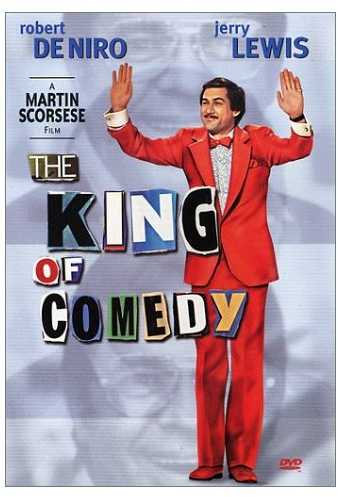
The King of Comedy
Cape Fear
The Departed
Shutter Island
Raging Bull
The Age of Innocence
Casino
Goodfellas
Taxi Driver
Mean Streets
The King of Comedy
Cape Fear
The Departed
Shutter Island
Raging Bull
The Age of Innocence
Casino
or
Steven Spielberg
10 sample films:
Jaws
Jurassic Park
The Color Purple
Empire of the Sun
Saving Private Ryan
Minority Report
The Terminal
Schindler’s List
Always
Raiders of the Lost Ark
Jaws
Jurassic Park
The Color Purple
Empire of the Sun
Saving Private Ryan
Minority Report
The Terminal
Schindler’s List
Always
Raiders of the Lost Ark
Which do you prefer? Let me know in the comments section
Thursday, March 17, 2011
Who Spiked My Lee?
This month The LAMBs in the Director’s Chair series is highlighting the works of Spike Lee. Over the years Spike Lee’s talents as a director have been overshadowed by his public comments about Quentin Tarantino’s use of the “N word” in films and Clint Eastwood’s lack of colour in his World War II films. Despite the media mishaps, Spike Lee has always been a director I admire. When I first started to pay attentions to films on a more serious level, Lee was one of the first mainstream directors I can remember whose films predominantly featured a cast that looked like me. Most importantly he has made many memorable films that still resonate with audiences years later. He are ten of Spike Lee’s film that I particularly enjoy:
Do the Right Thing – Hands down Spike Lee’s best films. I would even say it is one of the best films ever made. It easily ranks in the top 100 of any list, and if you do not have it there then you need to readjust your list. No other film to come out since has been able to capture racial tension the way this film does. This is a must see for any cinephile.
Sucker Free City – I saw this film, which was a pilot for a show that was never developed, at TIFF a few years back. I remember listening to Anthony Mackie talk about the film and what a pleasure it was to work with Lee. Besides featuring Mackie and another actor I really like, Ken Leung, Sucker Free City featured a really interesting premise that would have made for a great show. Similar to Martin Scorsese’s pilot for Boardwalk Empire, Lee not only establishes his main characters but sets up a few storylines all in a short running time.
Jungle Fever – While nowhere near Lee’s best works, this is the one film I find myself re-watching the most. The film is uneven at times because Lee has some ideas that are never quite realized. The thing that brings me back to this film the most though is the wonderful performances by Ossie Davis and Samuel L. Jackson as Wesley Snipe’s father and crack head brother respectively. The scene between Davis and Jackson towards the end of the film is just riveting to watch.
When the Levees Broke: A Requiem in Four Acts – I was completely riveted with Lee’s four hour documentary on the events surrounding Hurricane Katrina. It was the last documentary to make me both angry and extremely sad. I still get infuriated when I think of both the film and the events of Katrina. Some will argue that the film did not need to be four hours. I would argue that four hours is not enough.
She’s Gotta Have It – An independent, and sexually liberated, young woman who does not want to be tied down by anyone man? Sounds like a pilot for a Sex in the City spinoff. Yet Spike was already tackling these issues back in the 80’s. What I really liked about the film was how he framed this love triangle. You are never quite sure who Nora will finally choose. I also like that he shows African-American women as both smart and sexual beings, which is a stark contrast to what you see in most urban music videos nowadays.
Bamboozled – Controversial? You bet! Yet once you get past the initial shock of the “black face” debate the smart satire of the film begins to shine through. Lee provides an accurate commentary on television stations, like “B.E.T” and music videos that are causing a whole generation to take a step backwards. Yes the film is flawed, especially towards the end, yet Lee does succeed in generating discussion.
Inside Man – Several folks in the industry claimed that Lee did not know how to make a film that makes money (i.e. a commercial feature). This film is Spike Lee proving them all wrong. The Inside Man may not be a groundbreaking heist film but it is an entertaining one. Lee not only proved that he could get mainstream audiences into the theatre but also that he could direct a high profile cast (i.e. Jodie Foster, Clive Owen, and Lee regular Denzel Washington).
Malcolm X - The fact that this film only received two Academy Award nominations (best actor and best costume design) in 1993 is baffling. I understand that this was back when only five films could be nominated for best picture but was A Few Good Men really better than this? I think this is still Lee’s most ambitious film to date. He made a bio-pic on a figure that still polarizes many people to this day, yet managed to bring a level of humanity to the character that few see. While I think the film runs a little longer, it was still deserving of more praise than it received.
He Got Game – The whole imprisoned father who wants to reconnect with his son is a well worn genre. While the film never reaches the level of other similar stories, South Central for example, Denzel gives a strong performance and Ray Allen does a decent job in his first acting gig. Again, not Lee’s best film but one that I quite enjoy.
4 Little Girls – Lee’s first full length documentary is an example of his masterful storytelling. Focusing on one of the key moments in the Civil Rights movement, Lee skilfully details the events leading up to the bombing of the 16th Street church in Alabama in which four innocent young girls were murdered. The film is not only a reminder of a history that we are not all that far removed from, but it also serves as a warning of the depths to which racism can go.
Do the Right Thing – Hands down Spike Lee’s best films. I would even say it is one of the best films ever made. It easily ranks in the top 100 of any list, and if you do not have it there then you need to readjust your list. No other film to come out since has been able to capture racial tension the way this film does. This is a must see for any cinephile.
Sucker Free City – I saw this film, which was a pilot for a show that was never developed, at TIFF a few years back. I remember listening to Anthony Mackie talk about the film and what a pleasure it was to work with Lee. Besides featuring Mackie and another actor I really like, Ken Leung, Sucker Free City featured a really interesting premise that would have made for a great show. Similar to Martin Scorsese’s pilot for Boardwalk Empire, Lee not only establishes his main characters but sets up a few storylines all in a short running time.
Jungle Fever – While nowhere near Lee’s best works, this is the one film I find myself re-watching the most. The film is uneven at times because Lee has some ideas that are never quite realized. The thing that brings me back to this film the most though is the wonderful performances by Ossie Davis and Samuel L. Jackson as Wesley Snipe’s father and crack head brother respectively. The scene between Davis and Jackson towards the end of the film is just riveting to watch.
When the Levees Broke: A Requiem in Four Acts – I was completely riveted with Lee’s four hour documentary on the events surrounding Hurricane Katrina. It was the last documentary to make me both angry and extremely sad. I still get infuriated when I think of both the film and the events of Katrina. Some will argue that the film did not need to be four hours. I would argue that four hours is not enough.
She’s Gotta Have It – An independent, and sexually liberated, young woman who does not want to be tied down by anyone man? Sounds like a pilot for a Sex in the City spinoff. Yet Spike was already tackling these issues back in the 80’s. What I really liked about the film was how he framed this love triangle. You are never quite sure who Nora will finally choose. I also like that he shows African-American women as both smart and sexual beings, which is a stark contrast to what you see in most urban music videos nowadays.
Bamboozled – Controversial? You bet! Yet once you get past the initial shock of the “black face” debate the smart satire of the film begins to shine through. Lee provides an accurate commentary on television stations, like “B.E.T” and music videos that are causing a whole generation to take a step backwards. Yes the film is flawed, especially towards the end, yet Lee does succeed in generating discussion.
Inside Man – Several folks in the industry claimed that Lee did not know how to make a film that makes money (i.e. a commercial feature). This film is Spike Lee proving them all wrong. The Inside Man may not be a groundbreaking heist film but it is an entertaining one. Lee not only proved that he could get mainstream audiences into the theatre but also that he could direct a high profile cast (i.e. Jodie Foster, Clive Owen, and Lee regular Denzel Washington).
Malcolm X - The fact that this film only received two Academy Award nominations (best actor and best costume design) in 1993 is baffling. I understand that this was back when only five films could be nominated for best picture but was A Few Good Men really better than this? I think this is still Lee’s most ambitious film to date. He made a bio-pic on a figure that still polarizes many people to this day, yet managed to bring a level of humanity to the character that few see. While I think the film runs a little longer, it was still deserving of more praise than it received.
He Got Game – The whole imprisoned father who wants to reconnect with his son is a well worn genre. While the film never reaches the level of other similar stories, South Central for example, Denzel gives a strong performance and Ray Allen does a decent job in his first acting gig. Again, not Lee’s best film but one that I quite enjoy.
4 Little Girls – Lee’s first full length documentary is an example of his masterful storytelling. Focusing on one of the key moments in the Civil Rights movement, Lee skilfully details the events leading up to the bombing of the 16th Street church in Alabama in which four innocent young girls were murdered. The film is not only a reminder of a history that we are not all that far removed from, but it also serves as a warning of the depths to which racism can go.
Wednesday, March 9, 2011
Machete Maidens Unleashed! Bares All for Cheap Thrills
Machete Maidens Unleashed!
What do Martin Scorsese, Pam Grier, Joe Dante, and Jonathan Demme all have in common? Each one got their start in the B-movie genre. Thanks to films like Grindhouse, Black Dynamite, Machete, and the soon to be released Hobo with a Shotgun, the B–movie genre is having a resurgence in mainstream culture. Since Hollywood is embracing the genre once again, it is only fitting to see the hidden gems of the 2010 TIFF finally hit theatres this past weekend.
Machete Maidens Unleashed! is a hilarious documentary that looks at the inner workings of the B-movie genre at the height of its popularity. Focusing on the period between 1960 and 1980, director Mark Hartley’s documentary explores how many of the most memorable B-movies were actually made in the Philippines. Unable to resist the low production cost and the exotic locales, American filmmakers were heading to the Philippines in droves to get their films made. Since the censors rarely watched the types of films that many of the directors, including Roger Corman and Eddie Romero, were producing, they were able to get away with content that would be considered unheard of today. This resulted in a large quantity of outrageous horror films, blaxploitation flicks, and women in prison type of films being shot. As some of the folks Hartley interviewed pointed out, the crazier the idea the more popular the films ended up being.
Mark Hartley does a good job of interviewing many of the big names of the genre as well as experts in the history of the genre. This includes many of the actors and actresses who had to work in some extremely dangerous conditions. One of the highlights of Machete Maidens Unleashed! is the candid conversation that the likes of Corman, Dante, Sid Haig, Marlene Clark, Colleen Clark and countless others provide in the film. The interesting thing about some of the responses is how many of the actresses viewed many of the B-movies as feminist films.
Although many of the films featured a lot of female nudity and, in some cases, violence against women, the B-movie genre was the only genre to feature female leads in action roles. In many ways they were the first female action heroes. Despite some of the atrocities the characters may have endured, by the end of the film, they always rose up against their oppressors and saved the day. If you really think about it, there are very few action films nowadays that feature a female lead. Studios just do not see them as bankable action stars.
While Machete Maidens Unleashed! tracks the era all the way up to when Francis Ford Coppola was filming Apocalypse Now, Hartley himself does not offer any judgment in regards to the genre. He is mostly concerned with shining a light on a film history that very few people know about. Through wonderfully candid interviews and well selected film clips, Hartley crafts an immensely entertaining documentary that will serve as a great introduction to all who are novices of the world of B-movies.
What do Martin Scorsese, Pam Grier, Joe Dante, and Jonathan Demme all have in common? Each one got their start in the B-movie genre. Thanks to films like Grindhouse, Black Dynamite, Machete, and the soon to be released Hobo with a Shotgun, the B–movie genre is having a resurgence in mainstream culture. Since Hollywood is embracing the genre once again, it is only fitting to see the hidden gems of the 2010 TIFF finally hit theatres this past weekend.
Machete Maidens Unleashed! is a hilarious documentary that looks at the inner workings of the B-movie genre at the height of its popularity. Focusing on the period between 1960 and 1980, director Mark Hartley’s documentary explores how many of the most memorable B-movies were actually made in the Philippines. Unable to resist the low production cost and the exotic locales, American filmmakers were heading to the Philippines in droves to get their films made. Since the censors rarely watched the types of films that many of the directors, including Roger Corman and Eddie Romero, were producing, they were able to get away with content that would be considered unheard of today. This resulted in a large quantity of outrageous horror films, blaxploitation flicks, and women in prison type of films being shot. As some of the folks Hartley interviewed pointed out, the crazier the idea the more popular the films ended up being.
Mark Hartley does a good job of interviewing many of the big names of the genre as well as experts in the history of the genre. This includes many of the actors and actresses who had to work in some extremely dangerous conditions. One of the highlights of Machete Maidens Unleashed! is the candid conversation that the likes of Corman, Dante, Sid Haig, Marlene Clark, Colleen Clark and countless others provide in the film. The interesting thing about some of the responses is how many of the actresses viewed many of the B-movies as feminist films.
Although many of the films featured a lot of female nudity and, in some cases, violence against women, the B-movie genre was the only genre to feature female leads in action roles. In many ways they were the first female action heroes. Despite some of the atrocities the characters may have endured, by the end of the film, they always rose up against their oppressors and saved the day. If you really think about it, there are very few action films nowadays that feature a female lead. Studios just do not see them as bankable action stars.
While Machete Maidens Unleashed! tracks the era all the way up to when Francis Ford Coppola was filming Apocalypse Now, Hartley himself does not offer any judgment in regards to the genre. He is mostly concerned with shining a light on a film history that very few people know about. Through wonderfully candid interviews and well selected film clips, Hartley crafts an immensely entertaining documentary that will serve as a great introduction to all who are novices of the world of B-movies.
Tuesday, January 25, 2011
Will Boston Be Hollywood’s Next New York?
Thanks to the recent success of films like The Town, The Social Network and The Fighter it seems that Boston has become the city of choice for Hollywood these days. Although some are claiming that Boston has become the new New York of cinema, I do not think Boston has reached that level yet. If anything Boston seems to be turning into the east equivalent of the “dirty south”.
While corruption and crime have been prevalent in cinematic takes on Boston for years, there is a new wave of “Irish trailer trash” that has become a prominent fixture in many of the recent films. These are the characters that love their alcohol, frequently use drugs and take pride in their lack of education. In the past, these traits would stereotypically be associated with cinematic characters from the southern states. What was once considered a sign of southern backwardness has now become a badge of honour for Boston.
The fascinating thing about the recent emergence of Boston in modern day cinema is the portrayal of Boston women. Boston is becoming Hollywood’s hot bed for skanky and/or corrupt women. Whether it is the deadbeat mom Helen McCready (Amy Ryan) in Gone Baby Gone; the cokehead girlfriend Krista Coughlin (Blake Lively) in The Town; the over-barring mother of nine Alice Ward in The Fighter’s Alice Ward (Melissa Leo); or the Lady MacBeth-like Annabeth Marcus (Laura Linney) in Mystic River, the women of Boston are nothing like the ones you would find in movies set in New York or Los Angeles.
Speaking of New York and Los Angeles, one of the main reasons Boston has not reached their level in cinematic dominance yet is due to lack of romanticism. This is crucial when you look at how these cities are portrayed in films. Sure there are the grimy streets of New York featured in Martin Scorsese’s Mean Streets and Taxi Driver; not to mention the urban decay of the Los Angeles’ hoods featured in Boyz N The Hood and Colors. Yet, there are countless other films that romanticize both of these cities. Can anyone picture New York without thinking of Woody Allen’s Manhattan or Annie Hall? Can you think of LA without the glitz and glamour featured in everything from Sunset Boulevard to Mulholland Dr.?
Besides the corruption, and the obsession with sports, there is nothing in recent films that would make you drop everything and move to Boston. However, films like The Firm and The Departed have provided us glimpses of how the rich live in Boston. If we are to believe Spielberg’s War of the Worlds, the affluent ones in Boston can even survive an alien invasion without even a scratch on their car. Does this make Boston a must on your bucket list? While I am not asking for more Good Will Hunting type of films where the blue collar guy gets the girl, I would like to see other facets to Boston on screen besides the caricatures that Hollywood is portraying more and more frequently. I think if Boston is to be relevant in film as places like New York or L.A. we need to see the diversity that the city has to offer.
Tuesday, May 25, 2010
Cost of Island Destination Is Sheer Insanity
Shutter Island
Last month I did a top 5 post on the best and worst Martin Scorsese films. Needless to say the post received a lot of passionate feedback. Andrew at Encore’s World of Film and TV even labelled me a heretic, a badge I wear proudly mind you, for even suggesting that Scorsese has ever made a bad film. Having stirred the pot once already, the sensible thing would be ease off Scorsese for a while; luckily common sense was never one of my strong points.
The year is 1954, U.S. Marshall Teddy Daniels (Leonardo DiCaprio) and Chuck Aule (Mark Ruffalo) are sent to the notorious Shutter Island institution to investigate the disappearance of a patient. Stranded on the island, due to a terrible storm, Teddy begins to get headaches as he drifts in and out of hallucinations. As Teddy struggles with his sanity, he begins to question what type of experiments Dr. Cawley (Ben Kingsley) and Dr. Naehring (Max von Sydow) are conducting on the Shutter Island.
Let me just get this out of the way first, the last act of this film is ridiculous. Actually, it is more the aspects of the “reveal” rather than the cause it. I do not want to give away any spoilers so I will try to keep my annoyances brief. I will merely say that I found it highly unlikely that a facility like Shutter Island, which is home to some of the most dangerous and damaged patients, would allow such a free roaming environment. This is especially preposterous when you factor in the violent nature of certain patients.
The standout performances for me are those of Leonardo DiCaprio and Michelle Williams. There scenes together were fantastic, only Dicaprio’s scene during the war came close to rivalling their husband and wife moments. I also thought the large supporting cast, which included Emily Mortimer, Patricia Clarkson, Jackie Earle Haley, and Elias Koteas, did a terrific job of maintaining the level of tension. Normally I find it a bit distracting when I film such as this has so many high profile cameos. Yet none of the cameos felt out of place. Again, if it was not for the silly explanation that Martin Scorsese offers up in the last act, Shutter Island could have been a great movie. Still, the film is worth seeing for the first two acts alone.
Last month I did a top 5 post on the best and worst Martin Scorsese films. Needless to say the post received a lot of passionate feedback. Andrew at Encore’s World of Film and TV even labelled me a heretic, a badge I wear proudly mind you, for even suggesting that Scorsese has ever made a bad film. Having stirred the pot once already, the sensible thing would be ease off Scorsese for a while; luckily common sense was never one of my strong points.
The year is 1954, U.S. Marshall Teddy Daniels (Leonardo DiCaprio) and Chuck Aule (Mark Ruffalo) are sent to the notorious Shutter Island institution to investigate the disappearance of a patient. Stranded on the island, due to a terrible storm, Teddy begins to get headaches as he drifts in and out of hallucinations. As Teddy struggles with his sanity, he begins to question what type of experiments Dr. Cawley (Ben Kingsley) and Dr. Naehring (Max von Sydow) are conducting on the Shutter Island.
Let me just get this out of the way first, the last act of this film is ridiculous. Actually, it is more the aspects of the “reveal” rather than the cause it. I do not want to give away any spoilers so I will try to keep my annoyances brief. I will merely say that I found it highly unlikely that a facility like Shutter Island, which is home to some of the most dangerous and damaged patients, would allow such a free roaming environment. This is especially preposterous when you factor in the violent nature of certain patients.
The “reveal” aside, I must say that I was pleasantly surprised by the majority of Shutter Island. Martin Scorsese did a great job of maintaining the atmosphere, the best part of the film, and the overall suspense for the first 2/3 of the picture. The eeriness of the art direction kept me hooked the entire way through. The film could have used a little tighter editing, as it does run a bit long, but this is a minor quibble. Especially when you look at how wonderful the performances are during the course of the film.
The standout performances for me are those of Leonardo DiCaprio and Michelle Williams. There scenes together were fantastic, only Dicaprio’s scene during the war came close to rivalling their husband and wife moments. I also thought the large supporting cast, which included Emily Mortimer, Patricia Clarkson, Jackie Earle Haley, and Elias Koteas, did a terrific job of maintaining the level of tension. Normally I find it a bit distracting when I film such as this has so many high profile cameos. Yet none of the cameos felt out of place. Again, if it was not for the silly explanation that Martin Scorsese offers up in the last act, Shutter Island could have been a great movie. Still, the film is worth seeing for the first two acts alone.
Friday, May 14, 2010
Top Five Friday: Russell Crowe
The Best
Master and Commander: The Far Side of the World
Gladiator
The Worst
Virtuosity
Mystery, Alaska
As a hockey fan (Go Habs Go!), this movie should have appealed to me on several levels. I was not expecting something as captivating as say The Rocket, but at least something better than The Mighty Ducks. Sadly this ranks just above Slap Shots 2…yes, I really disliked this movie.
Proof of Life
Crowe’s tough, but sometimes sensitive, routine did nothing to help this film. Meg Ryan’s career was never the same after this movie.
A Good Year
Easily the worst Crowe/Scott film to date, not to mention the most boring. I am all for actors trying to show their softer side. Unfortunately I think Crowe got softer and dull mixed up somewhere in the process.
There was not a single bad performance in this entire film. This is the film where Crowe perfected his tough guy with a heart of gold routine that he used in numerous films afterwards.
I really liked the chemistry Russell Crowe and Paul Bettany have in this film. Peter Weir’s film did not grab me upon first viewing, but I have really grown to appreciate this film immensely over the years. I think I was just not in the right mood for Master and Commander upon my first viewing.
Many have tried to recapture the scope and fun of films like Spartacus and Ben Hur but few have succeeded like Gladiator. While I think Joaquin Phoenix is the weak link in this film, a lot of my reaction towards Phoenix may be due to the fact that Crowe’s Maximus is such a dominating character.
Romper Stomper
I actually prefer The Quick and the Dead over Romper Stomper on the whole, but Crowe’s performance in Romper Stomper is too sizzling to ignore. Really, he is the only reason to even watch this film.
The Insider
In my opinion 1999 is one of those defining years in cinema history. The sheer number of good, and sometimes groundbreaking, films was outstanding. The Insider was one of those great 1999 films that worked well on so many levels. The Worst
Virtuosity
I can still smell the cheese off of this flick. Luckily Washington and Crowe reteamed again for American Gangster, and proved that they could work well together given the proper project.
Body of Lies
Ridley Scott and Crowe have a Scorsese/De Niro style working relationship. This is their second weakest film together to date. Their worst film can be found at the bottom of this list
Mystery, Alaska
As a hockey fan (Go Habs Go!), this movie should have appealed to me on several levels. I was not expecting something as captivating as say The Rocket, but at least something better than The Mighty Ducks. Sadly this ranks just above Slap Shots 2…yes, I really disliked this movie.
Proof of Life
Crowe’s tough, but sometimes sensitive, routine did nothing to help this film. Meg Ryan’s career was never the same after this movie.
A Good Year
Easily the worst Crowe/Scott film to date, not to mention the most boring. I am all for actors trying to show their softer side. Unfortunately I think Crowe got softer and dull mixed up somewhere in the process.
Tuesday, April 27, 2010
The 5 Best & Worst Scorsese Films
I had planned to write an editorial piece on Martin Scorsese for the LAMBs in the Director's Chair series but time was not on my side this month. Still here are my picks for the best and worst Scorsese films:
The Best
The Best
I am not sure why this film does not get more love from the general public. In my opinion this is a hidden gem in Martin Scorsese's large canon of work.
Raging Bull
Still one of the best sports related films ever made. I remember first seeing this on the big screen at age 13 or so. The film was playing at one of the old historic theatres downtown as part of a Scorsese double bill. Even at a young age this film blew me away.I came close to placing either After Hours or The Last Waltz here, but ultimately went with Driver. The film has been quoted to death so it does not have the same replay value as some of the other ones on the list. Still every once and a while it is good to revisit the dark mind of Travis Bickle.
You knew this would appear on the list somewhere. With the exception of The Godfather series, ever other gangster film gets compared to this cinematic classic.
I was tempted to put Mean Street in this spot but figured I needed a break from the Scorsese/De Niro pairing. I loved Infernal Affairs and I really like how Scorsese remade the film. Since I have not seen Shutter Island yet, hope to catch it in the next week or so, I would say this is the best film of his films with Leonardo Dicaprio.
The Worst
Gangs of New York
The beginning of the Scorsese/DiCaprio era also coincided with the tail end of Scorsese’s decade long “Give Me an Oscar” push. Daniel Day-Lewis’ Bill the Butcher is the only reason to watch this bloated mess.
Love the casting, found the film to be rather dull on the whole. It also did not help that this came out when Ismail Merchant and James Ivory were still at the top of their game. There are far better period piece romances out there.
The cinematography is fantastic but the film just did not live up to my expectation.
See Gangs of New York comments minus Daniel Day-Lewis. DiCaprio gives a good performance in the film but I walked away learning nothing new, or interesting, about Howard Hughes. To see a biopic done right go back up to Raging Bull.
I like it better when it was called Goodfellas...
Monday, February 22, 2010
"The Sun’ll Come Out Gomorrah, Bet Your Bottom Dollar..."
Gomorrah (Gomorra)
As much as I enjoy films like The Godfather and Goodfellas, I admit that they have skewed my image of the Mafia. Those films have glamorized the mafia lifestyle to a point where it is easy to forget the average folks who end up suffering the most. Which is why a film like Matteo Garrone’s Golden Globe nominated work, Gomorrah, is so refreshing. It is a startling reminder of how so many innocent, and at times misguided, lives are destroyed by organized crime.
The film is based on Roberto Saviano tell all book about the Camorra. Saviano himself was forced to go into hiding after the book was published and, after seeing Gomorrah, I understand why. The Camorra have killed more people than any other organization over the last 30 years. They literally has its hands in every aspect of society. There is nothing that they do not own, and there is not a place where they cannot find you. The fascinating, and equally unsettling, thing about the Camorra is that they essentially are a high powered corporation. Besides dealing in the drug and weapons trade, they own various companies, in numerous industries, that do business with upstanding companies on a daily basis.
This fact is highlighted in the two most compelling stories in Gomorrah, the ones revolving around Pasquale and Roberto. Both men are good natured individuals looking to make an honest name for themselves. Yet they realize, the hard way, just how far the arms of the Camorra reach. Pasquale's arc is by far the saddest of the two, especially when you see how it plays out. The scene in the car with the Chinese, and the bittersweet truck stop moment, stayed with me for a while after the film. Same goes for the scene where Roberto watches the kids driving the trucks filled with toxic waste. While these scenes are not flashy, okay, maybe the car scene, they are shocking and subtly heartbreaking.
Compelling, without being excessively violent, Gomorrah offers much needed realism to an often romanticized gangster genre. Considering how well executed this film is, I am surprised that Gomorrah did not get an Academy Award nomination for Best Foreign Language, especially after receiving nominations at both this year's Golden Globes and BAFTA Awards. Regardless, Gomorrah is a film that should be on your "must see" short list the next time you visit your local DVD store.
Gomorrah is a film that looks at five individual stories and how they are all intertwined with the Camorra, the ruling Mafia in Naples, Italy. There is the tale of Don Ciro (Gianfelice Imparato), a middleman, who distributes money to the families of imprisoned Camorra members. Totò (Nicolo Manta) a 13-year-old grocery delivery boy who wishes to initiated into the gang. Marco (Marco Macor) and Ciro (Ciro Petrone), two cocky low rent thugs who steal weapons from the Camorra’s secret stash. Pasquale (Salvatore Cantalupo) a haute couture tailor who is offered money to train Chinese garment workers at a rival factory. And finally, Roberto (Carmine Paternoster), a graduate who discovers that the toxic waste management company he works for may not be as upstanding as he initially thought.
The film is based on Roberto Saviano tell all book about the Camorra. Saviano himself was forced to go into hiding after the book was published and, after seeing Gomorrah, I understand why. The Camorra have killed more people than any other organization over the last 30 years. They literally has its hands in every aspect of society. There is nothing that they do not own, and there is not a place where they cannot find you. The fascinating, and equally unsettling, thing about the Camorra is that they essentially are a high powered corporation. Besides dealing in the drug and weapons trade, they own various companies, in numerous industries, that do business with upstanding companies on a daily basis.
This fact is highlighted in the two most compelling stories in Gomorrah, the ones revolving around Pasquale and Roberto. Both men are good natured individuals looking to make an honest name for themselves. Yet they realize, the hard way, just how far the arms of the Camorra reach. Pasquale's arc is by far the saddest of the two, especially when you see how it plays out. The scene in the car with the Chinese, and the bittersweet truck stop moment, stayed with me for a while after the film. Same goes for the scene where Roberto watches the kids driving the trucks filled with toxic waste. While these scenes are not flashy, okay, maybe the car scene, they are shocking and subtly heartbreaking.
Compelling, without being excessively violent, Gomorrah offers much needed realism to an often romanticized gangster genre. Considering how well executed this film is, I am surprised that Gomorrah did not get an Academy Award nomination for Best Foreign Language, especially after receiving nominations at both this year's Golden Globes and BAFTA Awards. Regardless, Gomorrah is a film that should be on your "must see" short list the next time you visit your local DVD store.
Subscribe to:
Posts (Atom)